
Meta Description: Discover how Reflect Orbital’s satellite mirrors could let you order sunlight at night for solar farms, events, and more. Explore the technology, benefits for energy costs, launch timeline, and environmental concerns in this in-depth guide.
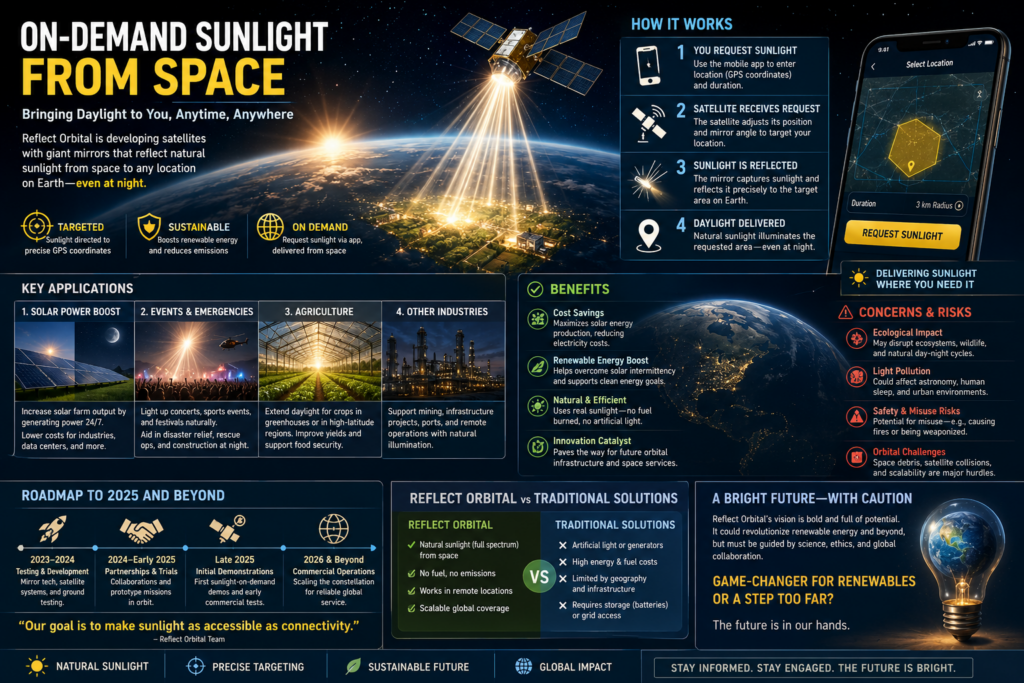
Introduction: The Dawn of On-Demand Sunlight
Imagine hosting a late-night outdoor event bathed in natural sunlight or boosting your solar farm’s output around the clock. What sounds like science fiction is inching closer to reality with Reflect Orbital, a startup developing satellites equipped with large mirrors to reflect sunlight from space directly to targeted spots on Earth—even at night.
This innovative concept promises to transform renewable energy, agriculture, and entertainment. But it also sparks debates about light pollution, ecological disruption, and unintended consequences. In this comprehensive guide, we’ll break down the technology, potential applications, challenges, and what the future holds as the company eyes a 2025 launch.
How Reflect Orbital’s Sunlight Satellites Work
Reflect Orbital’s system involves deploying satellites into orbit fitted with deployable mirrors. These mirrors act like giant reflectors, capturing sunlight and redirecting it precisely to GPS coordinates on Earth’s surface.
- User Experience: Customers use a mobile app to input location coordinates. Satellites then adjust their orientation to beam sunlight to that exact spot.
- Core Technology: High-precision mirrors and attitude control systems ensure accurate targeting. The mirrors are designed to be lightweight yet durable for space conditions.
- Timeline: The company plans initial demonstrations and commercial operations as early as late 2025, building on partnerships and testing phases.
This isn’t about creating artificial light—it’s about extending natural daylight hours on demand.
Key Applications: From Solar Power to Spectacles
The primary goal isn’t parties (though that’s a fun side use); it’s practical energy solutions.
1. Boosting Solar Farm Efficiency Solar panels only generate power during daylight. Nighttime “sunlight on demand” could significantly increase output, reducing reliance on battery storage or fossil fuel backups. This could lower electricity costs for manufacturing, data centers, and food production facilities.
2. Event Lighting and Emergency Response
- Outdoor concerts, festivals, or sports events could enjoy natural illumination without massive generator setups.
- Disaster relief: Illuminate rescue operations, temporary shelters, or construction sites at night.
3. Agriculture and Other Industries Extended “daylight” for greenhouses or crop fields in high-latitude regions during winter could enhance growth cycles and yields.
Benefits: Economic and Environmental Wins?
- Cost Savings: By maximizing solar energy production, businesses could see substantial reductions in energy expenses.
- Renewable Energy Acceleration: Helps bridge the gap in intermittent solar power, supporting global clean energy goals.
- Innovation Catalyst: Demonstrates feasible space-based infrastructure that could evolve into larger orbital systems.
Proponents argue this is a net positive for fighting climate change by making renewables more reliable.
Concerns and Potential Risks
While exciting, the project isn’t without criticism:
- Ecological Disruption: Altering natural day-night cycles could affect wildlife, plant behavior, human sleep patterns, and ecosystems reliant on darkness.
- Light Pollution: Increased artificial-like brightness in night skies might impact astronomy and urban areas.
- Safety and Misuse: Could the focused light act like a magnifying glass, causing fires or being weaponized? The company acknowledges significant engineering and regulatory hurdles remain.
- Orbital Debris and Scalability: Managing multiple satellites in crowded orbits poses technical and environmental challenges in space.
Public comments on the viral short highlight worries ranging from “cooking areas” to broader planetary heating concerns.
Reflect Orbital vs. Traditional Solutions
Compared to ground-based lighting or massive battery farms, space mirrors offer unique advantages in scale and natural spectrum light. However, they require international coordination, regulatory approval, and massive upfront investment—challenges that companies like SpaceX have navigated in related fields.
The Road Ahead: 2025 and Beyond
Reflect Orbital is still in early stages but has generated significant buzz. Success depends on:
- Technical demonstrations proving safe, precise targeting.
- Addressing regulatory and ethical questions.
- Scaling the constellation for reliable service.
If successful, this could mark the beginning of “orbital infrastructure” services, paving the way for more ambitious projects like space-based solar power.
Conclusion: Bright Future or Cautionary Tale?
Reflect Orbital’s vision of ordering sunlight at night blends innovation with audacity. It holds tremendous potential for clean energy but demands careful consideration of long-term impacts. As we approach 2025 launches, staying informed and engaging in the conversation will be key.
What do you think—game-changer for renewables or a step too far? Share your thoughts in the comments.
Related Reads:
- The Future of Space-Based Solar Power
- How Satellites Are Changing Renewable Energy
- Light Pollution: Impacts and Solutions
This article is for informational purposes. Technology details are based on public announcements and may evolve.